You're about to spend $5K or more on a product launch photoshoot, and the worst outcome isn't bad photos. It's realizing two weeks later you never got the vertical lifestyle image your Meta ads need, or the overhead flat lay your Amazon listing requires. Missing key shots during a launch is expensive and 100% preventable.
The fix isn't a longer shot list. It's a better scoping process before we step into the studio.
Why Do Brands Miss Key Shots During a Product Launch Photoshoot?
It almost always comes down to one thing: the brand planned the shoot around what looked cool instead of what they needed.
A mood board full of gorgeous inspiration is great. But if nobody mapped those images back to specific channels, specific placements, and specific dimensions, you're leaving gaps. And gaps show up at the worst time, like when your designer asks for a square hero image and all you have is horizontal.
The other common mistake is treating the photographer like a button-pusher. You hand over a shot list, they execute it, and you walk away. But a good product photographer brings strategic thinking to the table. They know a brand heavy on paid social needs completely different images than a brand focused on retail and Amazon. A DTC brand running Meta ads all day has different visual needs than one selling through Whole Foods. When your photographer understands your channel mix, the shoot gets smarter before it starts.
At Photos by Lars, we bring both a photography and marketing background to every project. We build the shot list with you, not for you. Your brand knowledge combined with our visual and strategic expertise means fewer surprises on shoot day.
How Do You Build a Shot List From Your Marketing Channels?
Start with where the photos will live. Not what they'll look like. Where.
Grab a spreadsheet and list every channel and placement where you'll use launch visuals over the next 90 days. Think about your product pages, Meta and Google ad sets, email campaigns, Amazon or retail listings, homepage hero, social posts, and PR assets. Next to each one, note the required dimensions, orientation, and quantity.
Now you have a real scope. You know you need 8 vertical lifestyle shots for Instagram, 4 horizontal hero images for web banners, 6 white-background cutouts for Amazon, and 3 overhead flat lays for email headers. Your shot list foundation came from business needs, not guesswork.
Shopify's product photography guide reinforces this approach: brands planning visuals around specific sales channels see stronger conversion rates than those who shoot generically and crop later. And according to Salsify's 2024 Consumer Research Report, 76% of shoppers say high-quality product images are critical to their decision to explore a product further.
This is exactly the work we do with clients before every shoot. We map your channels, count your deliverables, and build a shot list tailored to your launch goals. No guessing on shoot day.

What Should You Lock In Before Shoot Day?
Lock down three things before we step into the studio.
The deliverable count. Not a range. A number. "Around 30 images" leads to confusion. "32 final images: 12 lifestyle, 10 hero, 6 flat lay, 4 detail" gives everyone clarity. When both sides agree on exact deliverables upfront, you spend less time in revisions and more time launching.
The usage context for each shot type. Make sure your photographer knows the hero shots are for a homepage banner at 1920x600 and a Meta carousel at 1080x1080. The end use changes how they light, compose, and frame every single image. This is why the photographer should be part of the planning conversation, not brought in after you've made all the decisions.
The flexibility window. Here's what sounds contradictory but isn't: you want a locked plan with room to breathe. A great shoot has structure and spontaneity. For a recent project, we presented the client with 15 concepts for 12 paid deliverables. He approved all but one, and the concept we were most excited about didn't work as well with his product as expected. So we pivoted to a different setup on the spot, and it ended up looking even better. Budget 15-20% of your shoot time as flex time for moments like these.
We often shoot variations of each setup too, shifting the angle, swapping a prop, or trying a different composition. The final images still serve the same purpose, but you get to choose which version you like best. We handle this balance for every client through our pre-production process, so you show up knowing the plan is tight and we take care of the heavy lifting.
Who Needs to Be in the Room for Scoping?
The decision-maker and the photographer. If an agency is involved, they should be there too.
Too many voices in a scoping call leads to feature creep. Suddenly the shoot needs to cover three SKUs instead of one, add video, and include content nobody budgeted for. Scope creep is how a focused launch shoot turns into a bloated day where nothing gets the attention it deserves. (For what it's worth, behind-the-scenes content for social is included in most of our CPG photography packages, so you don't need to scope it separately.)
The decision-maker brings brand knowledge: what the product stands for, what the audience responds to, and what leadership expects to see. The photographer brings technical and strategic knowledge: what's achievable in the time allotted, what compositions work for which platforms, and how to sequence the day for efficiency.
And here's something worth knowing: you don't have to be on set. With our pre-production process, we align on every detail before the shoot. You approve the shot list, mood board, and direction ahead of time. If you'd rather review the images after instead of attending, we make it easy.
Two or three people on a scoping call is the sweet spot. At Photos by Lars, our discovery call gets the right people aligned fast.
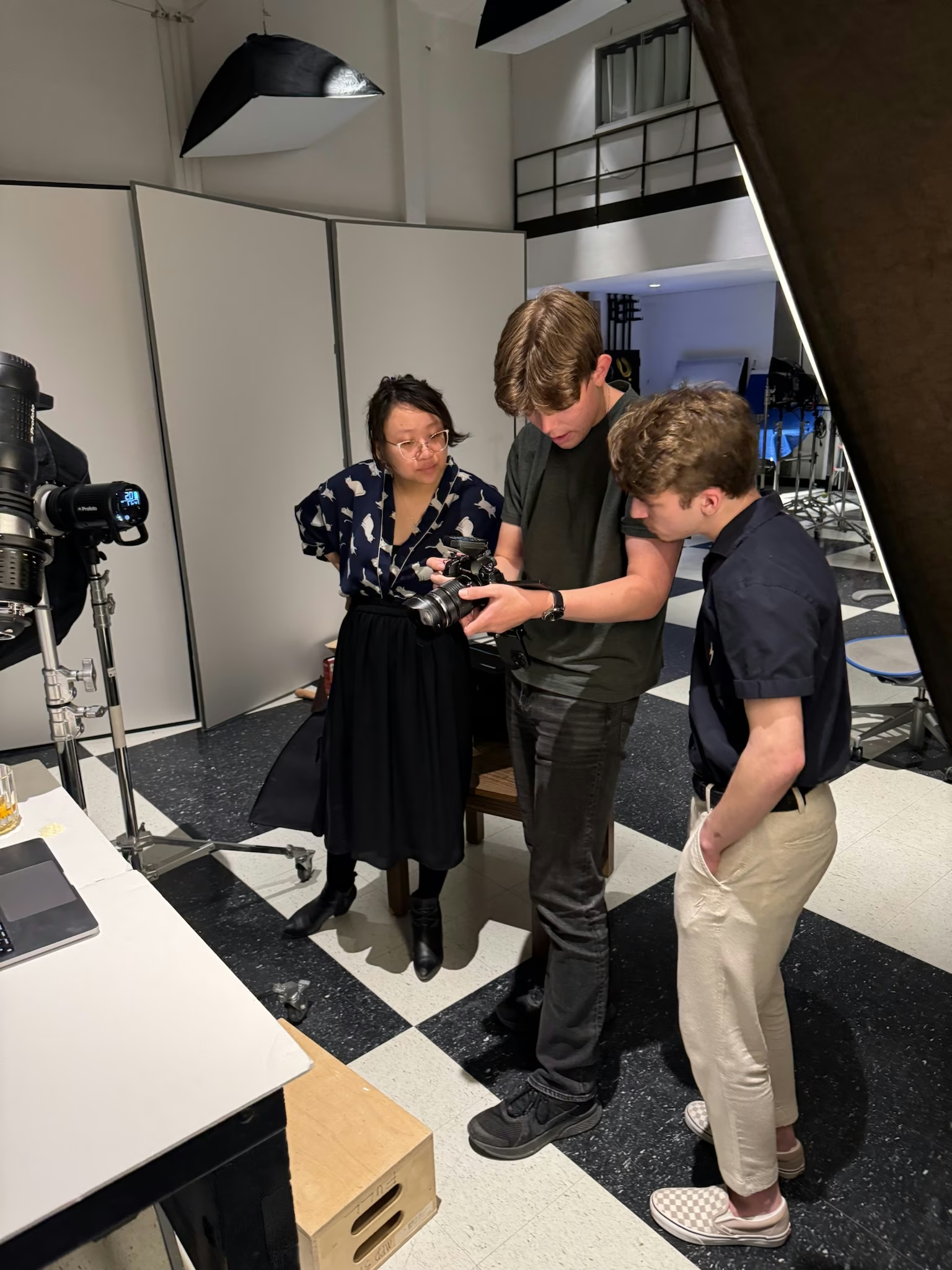
A Pre-Shoot Scoping Checklist for Your Next Product Launch Photoshoot
Before your next product launch photoshoot, run through these five questions with your photographer:
- What are every channel and placement these images need to serve in the first 90 days?
- How many final images do we need per channel, and in what orientations?
- What are the three most important shots, the ones causing the most pain if we miss them?
- Who has final approval, and will they be available on shoot day (or reviewing after)?
- How much flex time are we building in for creative discovery?
If you and your photographer agree on all five, you're in great shape. If any answer is "I'm not sure," close the gap before shoot day. Brands completing this pre-production alignment see 20-30% higher satisfaction with their final deliverables.
Here's the thing: this checklist works because it forces specificity. A vague scope leads to vague results. A specific scope, where every shot ties back to a channel and a business goal, leads to images your team uses for months. For a deeper look at structuring your first shoot, check out our planning checklist for CPG brands. And for help building a full photography brief, we've got a guide for creating one from scratch.
Common Questions
How Far in Advance Should I Scope a Product Launch Shoot?
We prefer 2-3 weeks between the first conversation and shoot day. But if you're under pressure, we've done it faster. One client sent an inquiry Friday morning, signed by Monday, received product Tuesday, and had final photos Thursday night with a couple of revisions wrapped up Friday. We prefer more time, but when speed matters, we deliver final images within 3 to 5 days.
What If I Don't Know All My Channels Yet?
Start with what you know for certain and add a buffer. If you're sure about your website, Amazon, and Instagram needs but still figuring out paid ads, scope for those three and add 4-6 extra shots as a safety net.
Should My Photographer Help With the Shot List or Should I Bring One?
Both. Bring your channel requirements, brand guidelines, and any inspiration images, then build the shot list together. Your photographer will catch things you'd miss, like negative space for text overlays or framing wide enough to crop for both horizontal and vertical placements.
How Do I Know If My Shoot Scope Is Too Big for One Day?
Count your final deliverables and divide by your shoot hours. For food and beverage product photography, a realistic benchmark is 2-3 unique setups per hour. If your math says you need 10 hours for an 8-hour day, we offer multi-day shoots. Because we bill by project, not by the hour, if a shoot runs over, we pick up the next day at no extra cost.
Want to plan your next shoot together? Book a call here and we'll map your channels, build your shot list, and make sure you walk into launch day with every image you need.